
Ask once instead of four times
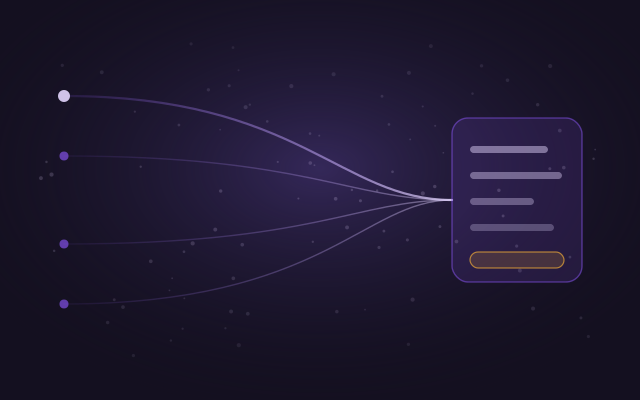
You write your question in one field. Which provider answers is something you decide before or after – not by keeping four windows open side by side.
Anthropic, OpenAI, Google and Perplexity run in the same interface. You ask your question once; if the answer doesn't fit, you send the same conversation to another model – with the history and the files you uploaded. What comes out of it belongs to the team, not to one personal account.
The Studio Engine is the module that launches first, and it is running in beta now.
Three moves that today cost four browser windows and a round of copy and paste.
You write your question in one field. Which provider answers is something you decide before or after – not by keeping four windows open side by side.
One click on another provider and the conversation carries on there. History, attachments and your instructions come along. You don't have to explain anything twice.
A finished conversation goes to one person, a team or the whole organisation. Anyone who should be writing too works on in it at the same time.
Summarise the three attached quotes and tell me where they contradict each other.
3 quotes.pdf
Eight things you do – not eight technologies that are built in.
Four providers in one interface. The switch takes the full context with it, uploaded files included.
Short question, short thinking time. For the tricky part you turn the thinking depth up – for that one message, not for the whole conversation.
Group the conversations that belong together and set the instructions that apply to all of them once. New conversations start already briefed.
Upload documents and ask questions about them. PDFs are read along with the question instead of sitting there as an attachment.
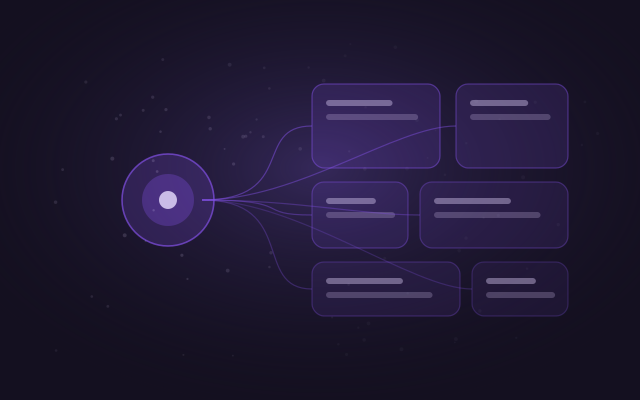
Every image and every document created collects automatically in one place. You don't go hunting for the conversation it came from.
Release a chat to one person, a team or the whole organisation. You decide per conversation, not per account.
Several people write in the same conversation at the same time. What someone has found out sits where the work carries on.
Administrators set which providers are released, how far the thinking depth may go and what budget is available each month.
The marketing suites that grew up over the years tie you to one provider and bill per seat. Three things run differently here.
If a provider gets more expensive or slower, or retires a model, you change provider and carry on working. Where you have got to doesn't hang on one company's roadmap.
The providers are reached through an EU access point*. That is a function of the platform and not an option you order on top.
Conversations belong to the team, not to the individual account. Sharing, working together and the cost overview per organisation are built in instead of scattered across single subscriptions.
The Studio Engine is running in beta – limited places, companies only. We deliberately don't name models or version numbers here: they change every month and would be wrong sooner than right.
Join the beta* The EU access point is part of ongoing development. What can be contractually assured of it will appear here once the infrastructure has been signed off.