

AI images in marketing: on brand rather than arbitrary
How a fixed image recipe builds a recognisable visual language, and what to settle legally and technically before publishing.
Which model suits which task, how to introduce AI in a team and what to settle before it may touch company data.
How a fixed image recipe builds a recognisable visual language, and what to settle legally and technically before publishing.
The distinction between provider and deployer, which marketing applications fall into which risk class, and the four real obligations.
What belongs in an AI policy, what expressly does not, and why one page achieves more than a twenty-page rulebook — with a complete outline to adopt.
Why choosing the tool is the smallest decision, which four skills actually have to be taught, and what an introduction over twelve weeks looks like.
What MCP does differently from a direct integration, where each one's strengths lie, and the four questions that carry the decision.
Why language models produce plausible-sounding false details, which five kinds of detail are most affected, and which measures actually help day to day.
The step from a single request to a repeatable process — the three readiness conditions and the places a human has to stay.
Sorted by the task to be done rather than by vendor — with the properties that matter per working step, and when switching costs time instead of saving it.
Every system cites differently — different sources, different currency, different willingness to name small providers.
Sorted by task rather than by vendor — with an assessment of effort, benefit and risk, and a clear recommendation on which three to start with.
Permissions, logging, scope and the handling of injected instructions — the six questions that have to be answered before the first connection.
Step by step from the empty configuration field to a working connection — with the pitfalls that appear in no documentation.
Three questions decide whether personal data may go into an AI system: contract, place of processing, and use for training.
Sorted by task, each with an explanation of why it is built that way — plus the four building blocks you can assemble any prompt of your own from.
The difference between more text and more effect: a five-stage production process and the three warning signs of dilution.
Google's actual position on automatically produced content, why detection tools do not work — and the five properties that bad text really fails on.
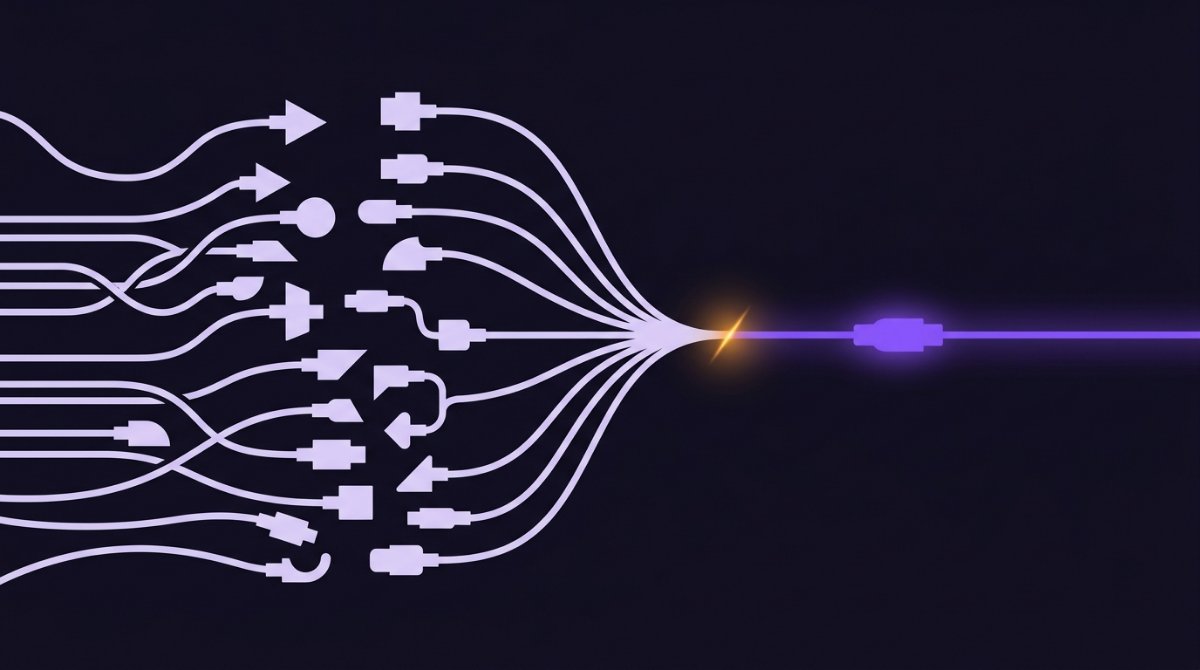
MCP is the open standard through which AI systems access your own data and tools. How it differs from a normal interface, and what to settle first.
How Claude and ChatGPT differ in day-to-day marketing work, which system solves which task better, and where each one falls short — with prompts to copy.